
Tuesday, May 29, 2018

Syndax Pharmaceuticals: Elucidating The Results Of The Phase 2 ENCORE 601 Trial

An investment operation is one which, upon thorough analysis, promises safety of principal and an adequate return. - Warren Buffett

Syndax Pharmaceuticals (NASDAQ:SNDX) is one of the new companies that we featured within the previous month. Interestingly, the firm recently reported the data for the ENCORE 601 trial. This is a sneak peek preview prior to the data to be presented at the American Society of Clinical Oncology (��ASCO��) Annual Meeting scheduled on June 1-5, 2018 in Chicago, Illinois.

Despite what was seemingly promising data, the market was not impressed and thus the stock tumbled significantly. The elephant in the room is where the shares are heading (and what investors can expect from Syndax). In this research, we��ll elucidate the recent clinical findings in its appropriate context to gauge where the shares are heading.
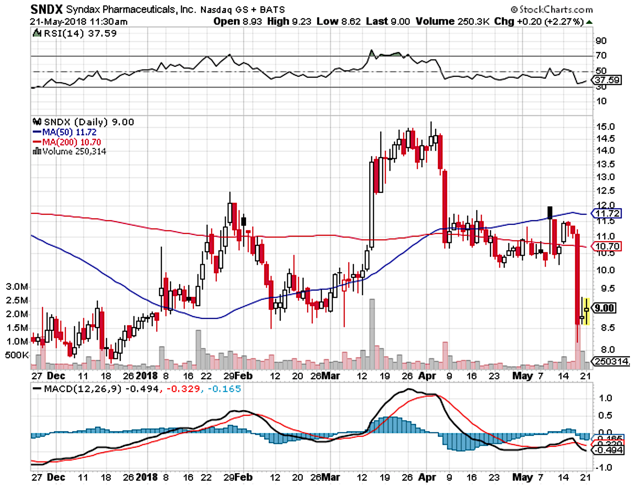
Figure 1: Syndax stock chart. (Source: StockCharts).

Fundamental Analysis

First things first, we wish to share an overview for new investors. Accordingly, Syndax Pharmaceuticals is headquartered in Waltham MA. The company is focusing on the therapeutic innovation and commercialization to service the oncology market. Leveraging on its immuno-oncology expertise, the firm is developing two potential best-in-class assets, entinostat and SNDX-6352 (as depicted in figure 2). For an in-depth discussion of the underlying science of entinostat and SND-6352, investors can refer to our initial analytical research on Syndax.
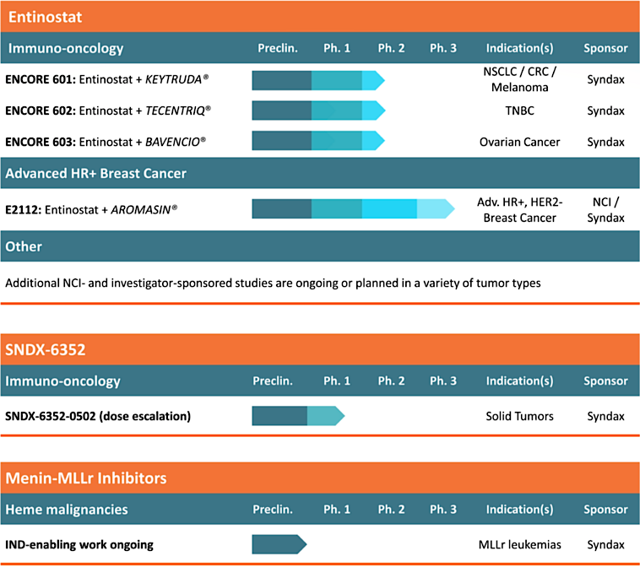
Figure 2: Therapeutic pipeline (Source: Syndax)

As alluded, Syndax reported the preliminary outcomes of the Phase 2 (ENCORE 601) trial on May 17, 2018. As a Phase 1B/2 trial investigating entinostat in combinations with pembrolizumab (Keytruda) of Merck (NYSE:MRK), ENCORE 601 is assessing the aforesaid combo regimen in multiple cohorts of PD-L1 treatment-naive and pre-treated cancers, including non-small cell lung cancer (��NSCLC��), melanoma, and microsatellite stable colorectal cancer (��MSS-CRC��).

At the time of interim analysis (i.e. data cut-off), there were six of 57 patients with NSCLC on the combination regimen who demonstrated partial responses for an 11% objective response rate (��ORR��). The median duration of response (��DOR��) was 4.6 months, with the longest observed response over 14 months. At cut-off, seven patients remain on study. Of note, these patients are extremely sick patients (with 22 or 38% cases already resistant to prior PD-L1 therapy); hence the ORR could not be as robust as what the market had expected. Commenting on the latest data development, the CEO (Dr. Morrison) remarked:

The additional data from the ENCORE 601 program continue to support the potential for the entinostat-pembrolizumab combination to serve as an effective therapeutic option across a variety of indications. We are especially pleased to be able to share preliminary findings from our efforts to identify biomarkers that could aid in predicting which patients may derive a clinical benefit from this combination therapy. We have now identified a potential registration pathway in NSCLC and look forward to providing further updates as our plans come together.

That aside, it��s interesting that the blood samples were collected and analyzed for 51 of the 57 NSCLC patients enrolled. Accordingly, the pre-treated baseline level of various markers was measured. One key assessment that stood out was the immune cells coined ��monocytes,�� which are immature macrophages - the immune cells that engulf pathogens and cancers. As follows, the early data explicated that patients with a higher level of monocytes (14 patients) demonstrated an elevated ORR of 29%, thereby representing 4 partial responders (��PR��) out of 14 patients as mentioned.

In addition, this subgroup remarkably showed the PFS of 5.4 months: this is much higher than the 2.8-month average for NSCLC managed with the 3rd-line chemotherapy (following progression after platinum doublet and PD-L1 treatment). The therapeutic effects of the combo drug are seemingly dependent on the monocytes level. As demonstrated in the patients with lower baseline levels of monocytes, the ORR was only 5% (2 PRs out of 37 patients) and the PFS was simply 2.5 months.

It is imperative to note that the overall patient population (n=57) achieved a PFS of 2.7 months, which is slightly lower than the aforesaid 2.8 mark. Therefore, it is unlikely that the entinostat-Keytruda will demonstrate key advantages over the 3rd-line regimen. Perhaps, the market was reacting negatively to this outcome. Be that as it may, the subpopulation is the key value driver of the NSCLC franchise. With 92% improvement over the standard 3rd-line chemotherapy, it��s most likely that this can be developed for the patients with a higher level of monocytes.

Based upon these findings, Syndax has identified a potential registration path in patients with NSCLC who have progressed on a PD-L1 inhibitor. The trial is expected to start by the end of 2018. Asides from Dr. Morrison, the Director of Thoracic Medicine Oncology Program at NYU Langone Perlmutter Cancer Center (Dr. Leena Gandhi) enthused:

NSCLC patients whose disease has progressed on PD-L1 and chemotherapy are in need of options that offer meaningful clinical benefits. Initial findings from this cohort of NSCLC patients receiving the entinostat-pembrolizumab combination provide encouraging benefit in ORR and PFS. Although more data is needed, promising results for a population of patients with high monocyte counts further highlight that a selection strategy may lead to enhanced benefits for patients.

Investors should be cognizant that while the strong results for the aforementioned combo franchise were not achieved for NSCLC in the overall patient population, it certainly did for the subcohort. Like cobimetinib of Exelixis (NASDAQ:EXEL) that did not procure strong clinical outcomes for the advanced colorectal cancer, nevertheless, it delivers robust results and is approved to treat resistant melanoma. The key point in the ENCORE 601 study is that it measures a vast number of biomarkers' assessment of pre- and on-treatment to better guide registration-directed studies that are most likely to bear fruits.

Final Remarks

Syndax is riding on the power of two lead molecules (entinostat and SNDX-6352) to power an enriched pipeline that can deliver hope to patients afflicted by various deadly cancers. If the reporting for the Phase 3 (E2112) within months turns out positive as we prognosticated, the share can appreciate by approximately one fold. Given the various partnership with Merck and Roche (OTCQX:RHHBY) for the co-development of entinostat with their flagship molecules (Keytruda, Tecentriq, and Bavencio), the company can get acquired if it demonstrates the strong clinical outcomes.

Asides from entinostat, SNDX-6352 is an interesting molecule that can deliver the long-term growth prospects. With many catalysts powering this firm and the asymmetric rewards to risks signified that the company can be a multibagger investment. The main concern for Syndax is if entinostat and the combo can deliver positive Phase 3 data. Since the most value in this company resides in entinostat, a negative reporting can induce the stock to depreciate by over 80%, and vice versa.

Author��s Notes: We��re honored that you took the time to read our market intelligence. Founded by Dr. Hung Tran, MD, MS, CNPR, (in collaborations with Analyst Vu, and other PhDs), Integrated BioSci Investing (��IBI��) is delivering stellar returns. To name a few, Nektar, Spectrum, Atara, and Kite procured over 324%, 144%, 258%, and 83% profits, respectively. Our secret sauce is extreme due diligence with expert data analysis. The service features a once-weekly exclusive Alpha-Intelligence article, daily analysis/consulting, and model portfolios. Of note, there is an IBI version of this article that is a higher-level intelligence with extensive details, in which we published in advanced and exclusively for our subscribers. And, we invite you to subscribe to our marketplace now to lock in the current price and save money for the future.

Disclosure: I/we have no positions in any stocks mentioned, and no plans to initiate any positions within the next 72 hours.

I wrote this article myself, and it expresses my own opinions. I am not receiving compensation for it (other than from Seeking Alpha). I have no business relationship with any company whose stock is mentioned in this article.

Additional disclosure: Our research articles are best used as starting points in your own due diligence. We are not registered investment advisors and our articles are not construed as professional investment advice. Many new research are requests from private investors of our services (Integrated BioSci Investing and Dr. Tran BioSci), who either paid or donated us to support our efforts (in assisting investors and bioscience innovators to deliver hopes to patients). That aside, I like to inform readers of Seeking Alpha's recent policy change, in which the company implemented the paywall (not only to our articles but to all articles that are published over 10-day). This is in place, as the company is, after all, a business. And, the revenues from ads are not adequate to support the high-quality research that the company is providing. If you are a REAL TIME FOLLOWER, you will be notified immediately of our new research for you to continue to benefit from our due diligence. You can also gain access to all of my old articles and much more by taking the 2-week FREE trial of my marketplace, Integrated BioSci Investing.


Friday, May 25, 2018

IPG Photonics Co. (IPGP) Shares Bought by Tredje AP fonden

Tredje AP fonden boosted its position in shares of IPG Photonics Co. (NASDAQ:IPGP) by 57.2% in the first quarter, according to its most recent filing with the Securities and Exchange Commission (SEC). The firm owned 3,160 shares of the semiconductor company’s stock after acquiring an additional 1,150 shares during the quarter. Tredje AP fonden’s holdings in IPG Photonics were worth $737,000 at the end of the most recent quarter.

A number of other institutional investors have also recently made changes to their positions in IPGP. Nisa Investment Advisors LLC boosted its holdings in IPG Photonics by 700.0% during the 4th quarter. Nisa Investment Advisors LLC now owns 4,000 shares of the semiconductor company’s stock valued at $857,000 after acquiring an additional 3,500 shares during the period. Bank of Montreal Can boosted its holdings in IPG Photonics by 243.5% during the 4th quarter. Bank of Montreal Can now owns 37,529 shares of the semiconductor company’s stock valued at $8,036,000 after acquiring an additional 26,605 shares during the period. Schwab Charles Investment Management Inc. boosted its holdings in IPG Photonics by 1.2% during the 4th quarter. Schwab Charles Investment Management Inc. now owns 142,852 shares of the semiconductor company’s stock valued at $30,589,000 after acquiring an additional 1,653 shares during the period. Livforsakringsbolaget Skandia Omsesidigt purchased a new position in IPG Photonics during the 4th quarter valued at about $128,000. Finally, State of Alaska Department of Revenue purchased a new position in IPG Photonics during the 4th quarter valued at about $556,000. Institutional investors own 57.16% of the company’s stock.

Get IPG Photonics alerts:

IPGP stock opened at $246.16 on Thursday. The company has a current ratio of 9.54, a quick ratio of 7.71 and a debt-to-equity ratio of 0.02. The stock has a market capitalization of $13.16 billion, a price-to-earnings ratio of 33.91, a P/E/G ratio of 2.41 and a beta of 1.85. IPG Photonics Co. has a 1 year low of $136.60 and a 1 year high of $264.11.

IPG Photonics (NASDAQ:IPGP) last posted its quarterly earnings results on Tuesday, May 1st. The semiconductor company reported $1.93 earnings per share (EPS) for the quarter, beating analysts’ consensus estimates of $1.80 by $0.13. The company had revenue of $359.90 million for the quarter, compared to analyst estimates of $346.35 million. IPG Photonics had a return on equity of 21.59% and a net margin of 25.56%. IPG Photonics’s revenue for the quarter was up 25.9% compared to the same quarter last year. During the same quarter last year, the company earned $1.38 EPS. equities analysts forecast that IPG Photonics Co. will post 8.48 EPS for the current fiscal year.

A number of equities analysts recently commented on the company. BidaskClub upgraded IPG Photonics from a “buy” rating to a “strong-buy” rating in a report on Saturday, May 12th. Needham & Company LLC raised their target price on IPG Photonics from $230.00 to $280.00 and gave the company a “buy” rating in a report on Wednesday, January 24th. Sanford C. Bernstein assumed coverage on IPG Photonics in a report on Wednesday, April 18th. They set an “outperform” rating and a $294.00 target price for the company. Zacks Investment Research cut IPG Photonics from a “buy” rating to a “hold” rating in a report on Tuesday, April 24th. Finally, ValuEngine upgraded IPG Photonics from a “buy” rating to a “strong-buy” rating in a report on Wednesday, May 2nd. Two research analysts have rated the stock with a hold rating, eight have assigned a buy rating and two have issued a strong buy rating to the company. The company currently has a consensus rating of “Buy” and an average price target of $239.10.

In other IPG Photonics news, major shareholder Valentin Gapontsev Trust I sold 2,000 shares of the stock in a transaction dated Monday, May 21st. The stock was sold at an average price of $245.63, for a total value of $491,260.00. Following the sale, the insider now owns 7,565,999 shares of the company’s stock, valued at approximately $1,858,436,334.37. The transaction was disclosed in a filing with the Securities & Exchange Commission, which is available through the SEC website. Also, Director William S. Hurley sold 3,500 shares of the stock in a transaction dated Wednesday, March 14th. The shares were sold at an average price of $255.93, for a total value of $895,755.00. Following the completion of the sale, the director now directly owns 14,505 shares in the company, valued at approximately $3,712,264.65. The disclosure for this sale can be found here. Insiders sold a total of 64,255 shares of company stock worth $15,725,764 in the last ninety days. 33.80% of the stock is owned by corporate insiders.

About IPG Photonics

IPG Photonics Corporation develops and manufactures a range of high-performance fiber lasers, fiber amplifiers, and diode lasers used in various applications primarily in materials processing worldwide. The company's laser products include low, medium, and high power lasers; fiber pigtailed packaged diodes and fiber coupled direct diode laser systems; high-energy pulsed lasers, multi-wavelength and tunable lasers, and single-polarization and single-frequency lasers; laser diode chips and packaged laser diodes; and high power optical fiber delivery cables, fiber couplers, beam switches, chillers, scanners, and other accessories.

Institutional Ownership by Quarter for IPG Photonics (NASDAQ:IPGP)

Thursday, May 24, 2018

As mortgage rates rise, homeowners avoid moving

Mortgage rates have climbed to a new seven-year high and that��s starting to crimp home sales.

The past week, the average 30-year fixed mortgage rate rose from 4.61% to 4.66%, the highest level since May 2011, mortgage giant Freddie Mac said Thursday. The rate is up from 3.95% at the start of the year and a recent low of 3.78% last September.

Thirty-year mortgage rates have risen in 15 of the first 21 weeks of 2018, the largest share since Freddie Mac began tracking the data in 1972. The healthy economy and prospects of higher inflation are pushing up yields on the 10-year Treasury bond to about 3%, and that rate directly affects mortgage rates.

The nearly three quarters of a percentage point increase in mortgage rates so far this year would boost the monthly payment on a $200,000 mortgage by about $85, according to Greg McBride, chief economist of Bankrate.com.

The higher costs may already be damping sales. Existing home sales fell 2.5% last month to a seasonally adjusted annual rate of 5.46 million and were 1.4% below the year ago level, the National Association of Realtors said Thursday. From January through April, home sales are up a�modest 1.5% from the same period a year ago, according to real estate research firm Zillow.

More: Holiday deals: 3 things you can buy for less on Memorial Day weekend

More: From their parents' basements to dream homes: Millennials are skipping starter houses

More: Cope with soaring gas prices: Avoid these cars, SUVs with the worst fuel economy

Some economists largely blame low housing supplies, not rates. There was a four-month inventory of existing homes on the market in April �� the time it would take to exhaust the supply at the current sales pace -- compared with�a balanced six-month stockpile. When units go up for sale, buyers are snapping them up. Homes typically stayed on the market 26 days in April, the shortest time frame since NAR began tracking the data in 2011.

��I think the reason home sales are not rising is just that there��s no inventory,�� says Freddie Mac Chief Economist Sam Khater.

Also, the skimpy supplies are pushing up prices, another factor that could be discouraging some buyers. The median price of an existing house was $257,900 last month, up 5.3% the past year.

But amid solid job and income growth and a stronger economy, higher rates and prices won��t stop the vast majority of Millennials from buying their first homes, Khater says. Most will simply buy smaller units, he says. Alternatively, they��ll buy homes further from the urban areas where they work, says Zilllow Senior economist Aaron Terrazas.

Yet both economists say higher rates are likely discouraging some existing homeowners who might otherwise sell their houses and buy larger ones. They may balk at forgoing their current low rates for a bigger monthly payment.

��If they don��t really need the extra space, they��re not going to move, Terrazas says. He believes home sales have been tempered�by a combination of the low supplies, higher prices and mortgage rates, and wages that have risen only modestly.

But Ian Shepherdson, chief economist of Pantheon Macroeconomics, mostly attributes the tepid sales to higher mortgage rates. An index of mortgage applications for home purchases is up 3.5% from a year ago. But it��s down 6% on a seasonally adjusted basis since it peaked in December, Shepherdson says. Mortgage applications reflects home buyer demand and current rates, he says, rather than obstacles that may ultimately prevent shoppers from buying a house, such as low supplies and competition from other buyers.

��It��s wishful thinking to argue that this isn��t about rates,�� he says. In recent years, he says, every half percentage point increase in rates has cut mortgage applications by about 8%.

Applications to refinance mortgages are more sensitive to rates and fell last week to the lowest level since December 2000, according to the Mortgage Bankers Association.

The effects of higher rates are likely to intensify, economists say. Khater predicts the average 30-year fixed rate will climb to about 5% by the end of the year.

CLOSE

The first permitted 3D-printed home debuted at SXSW in Austin and it has the ability to change the global housing crisis. Buzz60's Sean Dowling has more. Buzz60

Tuesday, May 22, 2018

Pound Could Weather Another U.K. Snap Election, Analyst Says

BMO Capital Markets is unfazed by the risk of a U.K. election.

The North American bank is bullish on sterling, seeing it gaining 7 percent to $1.44 by year-end, even after reports that Prime Minister Theresa May’s party is preparing for a second national vote in just over a year. The potential for more political drama at the same time as Brexit negotiations saw the pound slide to its lowest level this year on Monday.

#lazy-img-327921098:before{padding-top:56.25%;}

“It would leave the pound open to range trading and flatness but I don’t think it’s a big negative factor,” said BMO’s head of European currency strategy Stephen Gallo. “If we did go to elections the Conservatives would do quite well so I’m not as worried as some of my peers are.”

Not all pound bulls are so optimistic. ING Groep NV currency strategist Viraj Patel said a snap election would be “unambiguously pound negative”, while Jordan Rochester at Nomura International Plc pointed to the Conservatives only having a small poll lead compared to before the 2017 vote.

The Tories have likely learned from some of their mistakes in last year’s election, which saw May lose her majority in parliament, while a lot of people would vote for the status quo to get Brexit over with, Gallo said. Adding to the positive sterling thesis, he expects U.K. economic data to recover and the Bank of England to hike interest rates in August this year.

LISTEN TO ARTICLE 1:19 Share Share on Facebook Post to Twitter Send as an Email Print

Saturday, May 19, 2018

My Desert Island Indicator Flagged This Quick And Easy Trade

I'm sure many of you are familiar with the "desert island" game. You know... the one where someone asks things like:

"If you were stranded on a desert island and could only have one book, what book would that be?" Or maybe... "If you were stranded on a desert island and could only have one album to listen to, what would it be?"

Of course, there are hundreds of variations involving that one thing you would want if you were stranded on a desert island. (Sunscreen.)

I was recently asked, "What's your desert island indicator?" It's actually a common question among market analysts because it can provide some interesting insight into how that person thinks, although it became really popular after Warren Buffett was asked about his desert island indicator.

His answer was "railroad car loadings."

You can always count on Buffett for an interesting answer. Railroads have historically led the business cycle. When demand is picking up, factories will increase their orders, and railroads will increase their delivery of raw materials and finished goods. This should happen near the end of a recession, and the opposite should happen at the beginning of a recession.

That's the theory, and it worked very well in practice from the late 1800s until the Great Recession in 2008. The recent history is shown below.

The key to this indicator is looking for divergences between trends in rail carloads and trends in the stock market. (Currently, the level for rail freight carloads is lower than it used to be because there is less coal and paper shipped now. But even so, the indicator is still interpreted the same way.)

The chart above shows that rail carloads began rising before stocks bottomed in 2002. That was the bear market that followed the internet crash. The indicator turned down in 2007, warning of potential weakness long before the bear market began in 2008.

In 2009, the indicator and the stock market bottomed at about the same time. Now, the indicator is in a downtrend while stocks are rising, indicating that this is a time to be cautious in the stock market.

Buffett's desert island indicator demonstrates why we need to dig into our favorite tools at times. At first glance, many analysts would say rail carloads don't work anymore because the high in the recent cycle was so far below the previous highs. But by digging into the components of the index, I discovered that coal and paper shipments had declined sharply since the mid-2000s.

Less coal is being mined because of environmental regulations and increased availability of wind and solar energy. Less paper is used now because the internet has resulted in fewer newspaper and magazine subscriptions.

This is why it's important to review indicators (and why it's important to understand why an indicator works). Buffett's go-to indicator isn't broken -- we just need to make an adjustment to account for these changes.

So, what's my desert island indicator?

As my premium Income Trader readers know, it's the Income Trader Volatility (ITV) indicator.

For those who don't know, this is the indicator I developed to identify the best time to sell put options. Back in 2015, my research behind this indicator won the Charles H. Dow Award for outstanding research in technical analysis.

I've been monitoring the performance of my indicator since I first started using it, and it still works exactly as I designed it to. (I recently discussed the track record of the indicator here.) You can see the results for yourself:

My most recent recommendation to Income Trader readers is on a stock that was recently flagged by an ITV signal -- Wynn Resorts (NASDAQ: WYNN).

I've written about WYNN several times now, and, despite the recent change in leadership, its fundamentals are relatively unchanged since my last detailed review. (More on that news in a second.)

For anyone who needs it, here's a quick refresher on Wynn Resorts:

The company owns and operates Wynn Las Vegas and Encore in Las Vegas, Nevada as well as Wynn Macau and the newly opened Wynn Palace located in the Special Administrative Region of Macau in the People's Republic of China.

The company builds and operates large properties to maximize revenue and potential profits. Wynn and Encore Las Vegas offer 4,748 hotel rooms, suites and villas along with approximately 186,000 square feet of casino space, 34 food and beverage outlets, an onsite 18-hole golf course, three nightclubs, and roughly 99,000 square feet of retail space and meeting space.

What I like about the company right now is the fact that WYNN recently handled a problem in exactly the way other large companies should strive to replicate.

WYNN's problem was that its eponymous CEO, Steve Wynn, was accused of sexual harassment... and the details were as lurid as those made against Harvey Weinstein. Like the Weinstein allegation, the behavior is alleged to have continued for years. Unlike the Weinstein story, Wynn quickly stepped aside -- a move that has allowed the company to survive.

Investors' reaction to this story can be seen in the WYNN's daily price chart.

In the long run, WYNN could face some challenges, but that's exactly why I'm focusing on an extremely short-term trade -- one that will be closed less than 17 days after we buy (tomorrow, in fact).

The company's next scheduled earnings report isn't until late July, which is months after we'll be out of this trade. For our purposes, the most important detail of note is that the volatility from the news has generated an ITV "buy" signal, which is the setup for today's exciting income opportunity.

How I'm Trading This Stock -- Without Buying A Single Share
Investors interested in profiting from WYNN could simply buy the stock and hope for a short-term bump.

But my Income Trader readers and I are using a better strategy. This one allows us to collect quick income from WYNN immediately -- and be completely out of the trade in less than 17 days. Worst-case scenario: we get the chance to buy WYNN at an 8.6% discount.

Either way, we'll be celebrating tomorrow.

If you're familiar with how selling put options works, then you know how that it's the closest thing to a can't-lose situation, provided you're targeting the right stocks.

For those who want to know more about our strategy, I've released a special report that will tell you everything you need to know, including how my readers are making about $568 a week from selling options. There's even a list of three questions to ask yourself to help determine if you're ready to trade options. Simply follow this link to check it out.